Not a persona
A persona tells AI who you are supposed to be. A Bionic Mind watches how you actually behave.
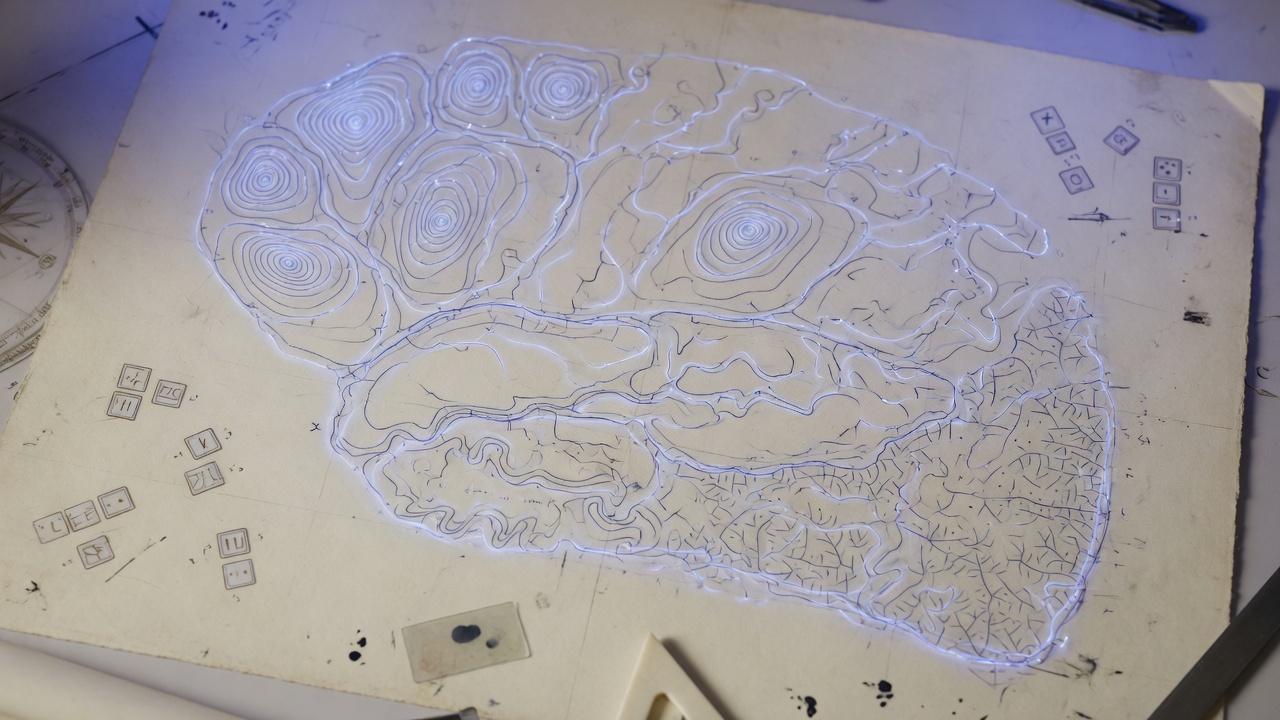
Behavioral science × individual AI
Behavioral science gives us the map. AI learns you.
Bionic Mind learns from your choices, language and behavior to predict how you'll respond to situations it has never seen before—and gets better every time it's wrong.
Standing on decades of research in human behavior and computational cognition.
Institutions and publications shown identify relevant research referenced by Bionic Mind. No affiliation or endorsement is implied.

Live prototype · not a product
Three short choices. Then the model updates, and tries a situation it has never seen. Nothing here is a clinical score.
Human prior
What this is not
A persona tells AI who you are supposed to be. A Bionic Mind watches how you actually behave.
Memory remembers what you said. A mind model predicts what you'll do next — including in situations it has never seen.
A digital replica is a portrait from one sitting. This is meant to keep sitting. Every miss should update the model.
What you would use it for
Language models already have a model of language and a rough model of the world. They still treat you as a generic human, or as a transcript. Bionic Mind is the layer in between.
01
Not a chatbot that stores your last ten messages. A model that can guess whether you will take the sure thing, wait, or share the risk — and get better when it is wrong.
02
Offers, pacing, and explanations can follow the individual instead of a persona card. The same interface, a different mind behind it.
03
Science already models humans in general. The open question is whether we can learn one person quickly, and keep the model honest against their real behavior.
How a Bionic Mind would run
01
Behavioral science and large experimental datasets already describe how people, in general, take risk, wait, share, remember and explore. That is the map.
02
Choices, language and later real behavior are treated as evidence — not as a quiz that finishes. A few observations move the model off the average.
03
The point is not to replay the last question. It is to forecast a new one: a deal, a delay, a social split, a night when the frame changes.
04
Every prediction is an experiment. When the person does something else, the model updates. That loop is the product.
A persona describes someone using a handful of attributes. Behavioral science shows that human behavior emerges from interacting systems of preferences, heuristics, beliefs, memory, reward, context and learning.
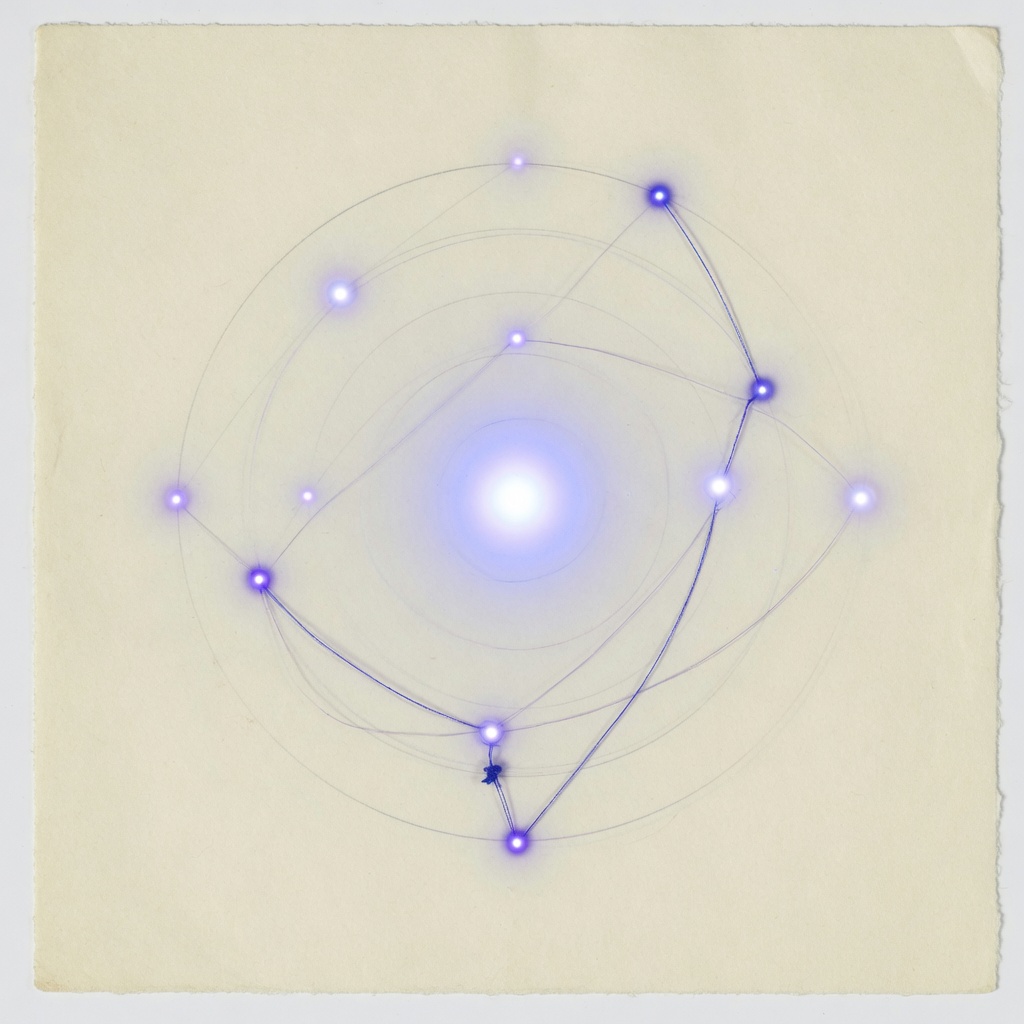
Bionic Mind
model of you
Behavioral space
How does this individual trade certainty against upside?
These are dimensions of the behavioral space Bionic Mind ultimately learns across—not a claim that every one is scientifically validated in the current prototype.
Previous academic research
10.7M
Human choices
Psych-101 comprises 10,681,650 trial-by-trial choices used to develop Centaur.
Previous academic research
1,052
Real people modeled
Stanford researchers created generative agents representing 1,052 actual participants.
Previous academic research
160
Behavioral experiments
Psych-101 covers 160 psychological experiments across decision-making, learning, memory and related domains.
Previous academic research
85%
of human self-replication
Agents reproduced General Social Survey answers at 85% of the accuracy with which participants reproduced their own answers two weeks later.
The research frontier has established that human behavior can increasingly be modeled computationally.
Instead of stopping at a general model of humans—or freezing someone into a static digital replica—Bionic Mind continuously learns the individual.
Stanford HAI
Stanford researchers created generative agents representing 1,052 actual participants using in-depth interviews and evaluated them against social-science surveys and experiments. The agents reproduced participants' responses at 85% of the accuracy with which people reproduced their own answers two weeks later.
Research has shown AI can model individuals. Bionic Mind asks the next question: can that model continuously learn the person?
Park et al. · Stanford HAI · Generative Agent Simulations of 1,000 PeoplePublished in Nature
The 2025 Centaur research trained a language model on 10.7M choices from more than 60,092 participants across 160 psychological experiments. The resulting model generalized across unseen participants, experimental modifications and new behavioral domains.
Human behavior contains learnable computational structure.
Centaur models general human cognition. Bionic Mind aims to learn the individual on top of that human prior.
Binz et al. · Nature 644, 1002–1009 (2025)The scientific trajectory
Behavioral science
Human behavior has systematic structure.
Computational cognition
Computational models can learn that structure.
Generative AI
LLMs can simulate real individuals.
Bionic Mind
What if every AI could continuously learn the specific human it serves?
Can we combine these ideas into a model that starts with general human cognition, learns an individual rapidly, and continuously updates itself against that person's real behavior?
This is our research question. Not a claim that it has already been solved.