Scientific lineage
Research
Four questions the field has already asked. Then the one we are asking.
Question 01
Can human decisions be modeled?
Human decisions display systematic patterns rather than behaving as pure randomness. Framing, loss weighting and other regularities are stable enough to study — and therefore stable enough to learn.
Tversky & Kahneman — heuristics, biases and framingQuestion 02
Can computers infer psychological characteristics?
Behavior contains information about latent individual characteristics. Digital and experimental traces are not the person — but they are evidence the person leaves behind.
Kosinski, Stillwell & Graepel, PNAS 2013Question 03
Can AI simulate real individuals?
Rich personal information can enable LLM agents to reproduce individual responses across multiple evaluations. The result is a static portrait. Bionic Mind asks what happens if the portrait keeps sitting for the painter.
Stanford HAI — Generative Agent Simulations of 1,000 PeopleQuestion 04
Can one model capture many forms of human cognition?
Behavioral data from many experimental paradigms can be unified inside a general computational model of human cognition. Centaur is a model of humans. Bionic Mind is an attempt to learn you on top of that human prior.
Centaur — Nature, 2025Centaur author affiliations include the Max Planck Institute, Princeton University, the University of Oxford, the University of Cambridge, Google DeepMind, Helmholtz Munich, the University of Tübingen and NYU, among others. Listing them describes the scientific lineage of the paper. It does not describe a relationship with Bionic Mind.
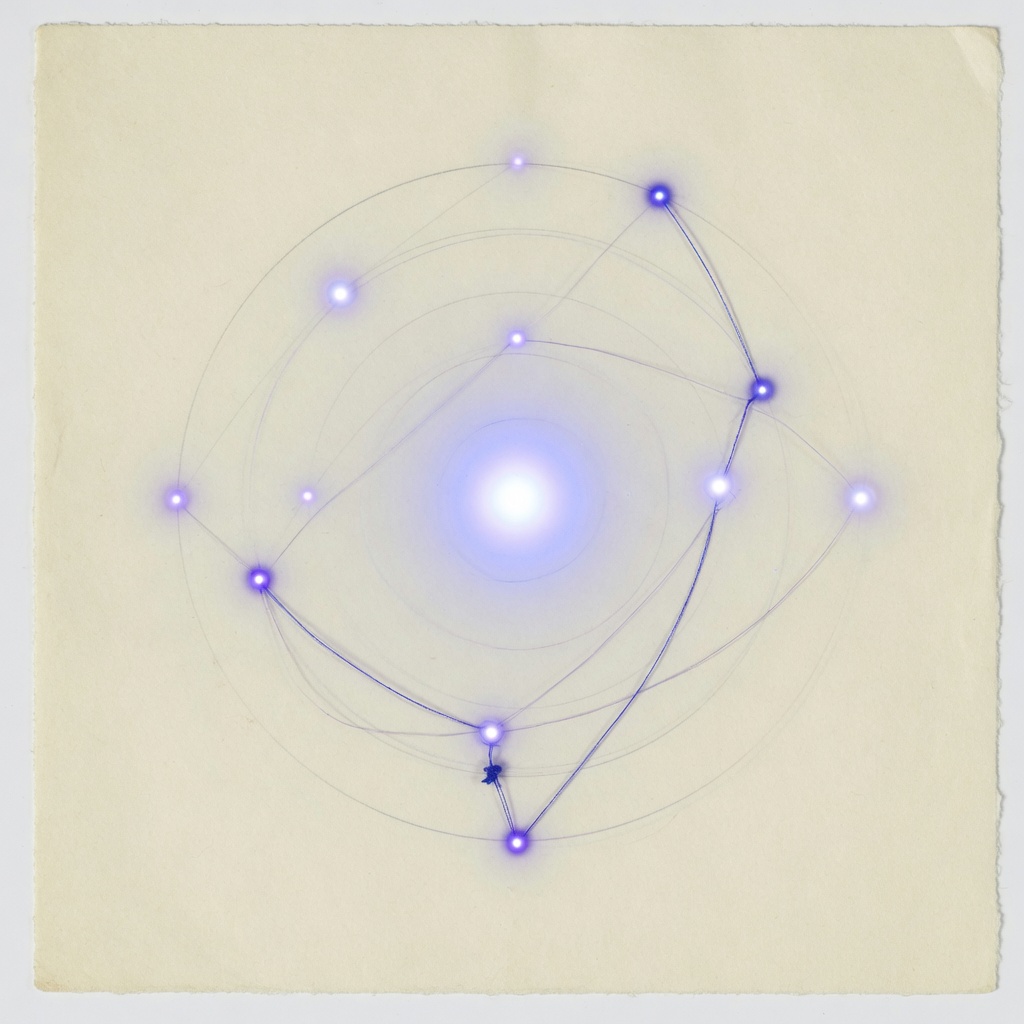
The scientific trajectory
Behavioral science
Human behavior has systematic structure.
Computational cognition
Computational models can learn that structure.
Generative AI
LLMs can simulate real individuals.
Bionic Mind
What if every AI could continuously learn the specific human it serves?
The Bionic Mind hypothesis
Can we combine these ideas into a model that starts with general human cognition, learns an individual rapidly, and continuously updates itself against that person's real behavior?
This is our research question. Not a claim that it has already been solved.
- AI has a model of language. A model of the world. We think it needs a model of you.
- A persona tells AI who you are. A Bionic Mind learns how you behave.
- Memory remembers what you said. A mind model predicts what you'll do next.
- Every prediction is an experiment. Every response makes the model more you.